This week has been packed with thrilling scientific discoveries and advancements. From private companies racing to the Moon to breakthroughs in medical technology and ancient discoveries reshaping our understanding of history, here are seven fascinating topics that have made headlines.

1. Private Company Rockets Toward the Moon
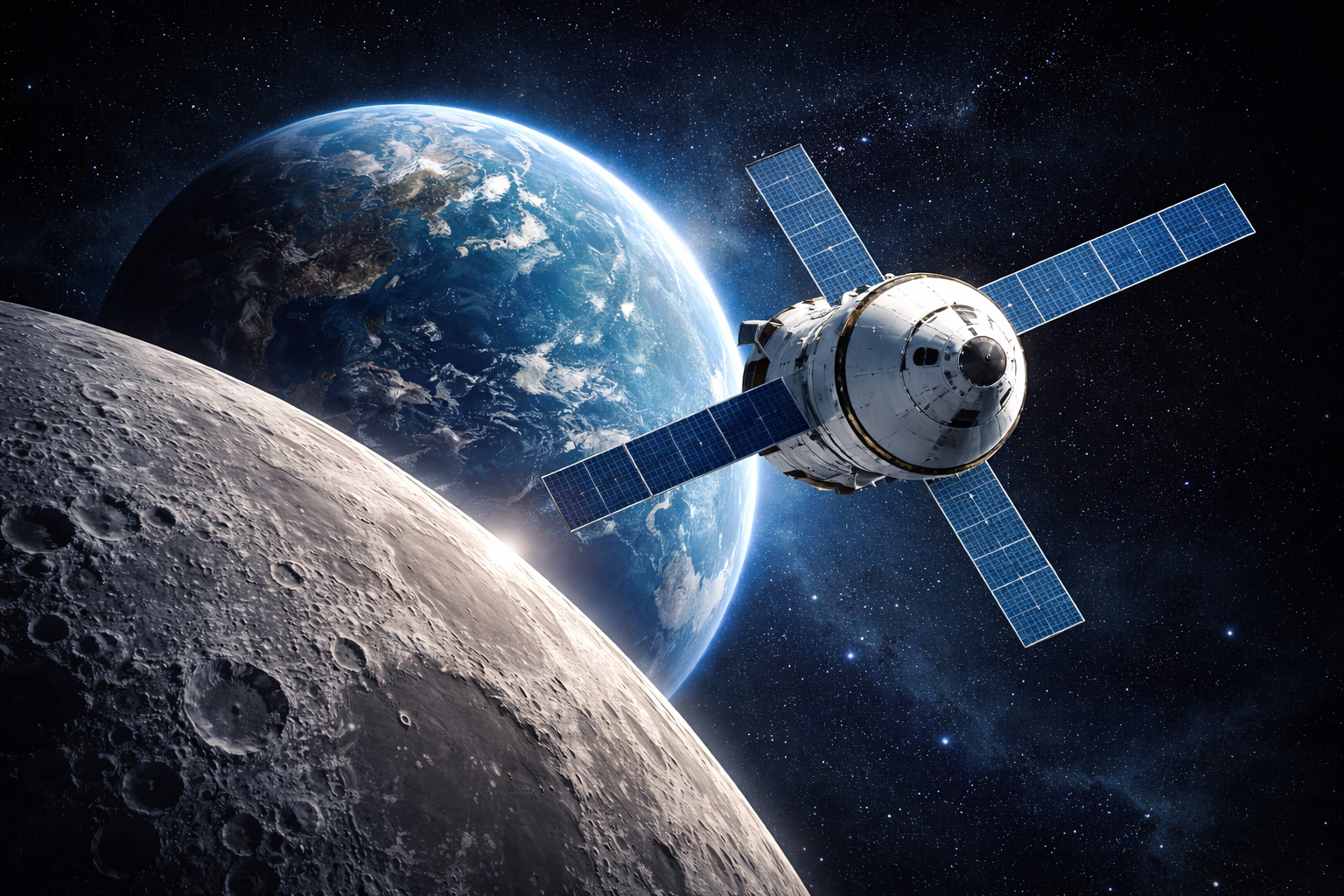
In an exciting leap for lunar exploration, the private company Intuitive Machines has successfully launched its second lunar lander, Athena. The spacecraft was carried aboard a SpaceX Falcon 9 rocket from NASA’s Kennedy Space Center and is now on its way to the Moon.
If all goes well, Athena is expected to land near the lunar south pole by March 6, a region of great interest to scientists due to its potential ice deposits. The lander carries a drone named Grace, which is specifically designed to hop into permanently shadowed craters in search of frozen water.
Why is this so important? Water on the Moon is a game-changer for future space exploration. It could provide drinking water for astronauts and even be broken down into hydrogen and oxygen for rocket fuel. This mission is part of NASA’s Commercial Lunar Payload Services program, which aims to bring private industry into the space exploration game. If successful, it will be a significant step toward sustained human presence on the Moon.
This mission is also a reminder that we are entering a new era of space exploration. For decades, only government agencies like NASA and Roscosmos led space missions. Now, private companies are stepping up in ways that could make space travel more frequent, affordable, and innovative. It’s an exciting time for space enthusiasts, and this mission could set the stage for even more ambitious lunar projects in the near future.
2. Low Vitamin B12 Levels Linked to Increased Dementia Risk
A new study from the University of California San Francisco has revealed that vitamin B12 plays a more critical role in brain health than previously thought. Researchers analyzed data from over 3,000 people and found that even individuals who had B12 levels above the current U.S. recommended minimum showed signs of slower cognitive and visual processing speeds, as well as more brain lesions—both of which are associated with cognitive decline and dementia.
This discovery raises serious questions about whether the recommended daily intake of vitamin B12 is too low. The study suggests that even people who aren’t technically deficient could still be at risk for neurological problems if their B12 levels aren’t optimal. This is especially concerning for older adults, as vitamin B12 absorption declines with age.
Vitamin B12 is naturally found in animal products like meat, eggs, and dairy, meaning vegetarians and vegans are at higher risk of deficiency. However, fortified foods and supplements are available to help maintain adequate levels. This study is a reminder that proper nutrition is crucial for long-term brain health and that dietary guidelines may need to be updated to reflect these new findings.
3. Concerns Over U.S. Research Funding Cutbacks
The scientific community is growing increasingly concerned about reductions in research and development (R&D) funding in the United States. Recent budget cuts have impacted major institutions like the National Institutes of Health (NIH) and the National Science Foundation (NSF), raising fears that the country’s leadership in scientific innovation could be at risk.
Basic research—the kind that leads to groundbreaking discoveries—relies heavily on government funding. While private companies invest in R&D, they often focus on short-term projects with immediate commercial applications rather than fundamental scientific breakthroughs. Without strong government support, many long-term scientific initiatives could be delayed or abandoned.
Scientists argue that cutting R&D funding is short-sighted because scientific advancements drive economic growth, technological innovation, and public health improvements. The United States has historically been a global leader in scientific research, and maintaining that position requires continuous investment. If these funding cutbacks continue, the country could fall behind in critical fields such as artificial intelligence, medicine, and clean energy technology.

4. EPA Head Urges Reconsideration of Climate Science
In environmental news, the head of the Environmental Protection Agency (EPA) has privately urged the administration to reconsider the 2009 endangerment finding. This finding officially recognizes greenhouse gases as a threat to public health and serves as the foundation for many U.S. climate regulations. If overturned, it could significantly weaken efforts to combat climate change.
Climate scientists and environmental groups are deeply concerned about this potential shift. The overwhelming scientific consensus is that greenhouse gases, primarily carbon dioxide and methane, are driving global warming. Weakening the legal framework that regulates emissions could lead to increased pollution and further environmental degradation.
At a time when extreme weather events, wildfires, and rising sea levels are becoming more severe, many argue that now is the worst possible moment to roll back climate protections. The coming months will be critical in determining whether the U.S. strengthens or weakens its commitment to addressing climate change.
5. Advances in Quantum Computing
Quantum computing has taken another giant leap forward. Scientists have successfully demonstrated quantum teleportation between two quantum computers—a breakthrough that could revolutionize secure communication and data processing. Quantum teleportation allows information to be transferred instantaneously between particles without them physically moving, making it a potential game-changer for cybersecurity.
This discovery is particularly exciting because traditional computers rely on binary bits (0s and 1s), while quantum computers use qubits. Qubits can exist in multiple states at once, allowing quantum computers to solve problems exponentially faster than conventional machines. With quantum teleportation, we are one step closer to creating ultra-secure networks that hackers cannot infiltrate.
Although quantum computers are still in their early stages, experts predict they will eventually transform industries ranging from medicine to artificial intelligence. Researchers are optimistic that within the next decade, quantum computing will be commercially viable, leading to innovations we can’t even imagine yet.

6. Discovery of Ancient Alphabet
Archaeologists working in Syria have made an incredible discovery: ancient clay cylinders inscribed with what may be the oldest known alphabet. The markings suggest a transition from pictographs to a phonetic writing system, offering valuable insights into the evolution of human language.
This finding is particularly exciting because it fills a gap in our understanding of how written language developed. Most early writing systems, such as Egyptian hieroglyphs and Sumerian cuneiform, were complex and used hundreds of symbols. The newly discovered script, however, appears to use a smaller set of characters, indicating the early stages of an alphabetic system.
If further analysis confirms that this is indeed the world’s oldest alphabet, it could reshape what we know about ancient civilizations and their ability to communicate. It’s a reminder that history is still being uncovered, and every new discovery adds another piece to the puzzle of human development.
7. Innovations in Medical Technology
A groundbreaking new medical device is set to revolutionize how we monitor blood pressure. Researchers have developed a wearable ultrasound patch that provides continuous, non-invasive blood pressure monitoring. Unlike traditional cuffs, which only give periodic readings, this device offers real-time tracking throughout the day.
Hypertension, or high blood pressure, is a major risk factor for heart disease and stroke, two of the leading causes of death worldwide. By allowing doctors and patients to monitor blood pressure fluctuations more accurately, this technology could lead to earlier interventions and better health outcomes.
Wearable medical technology is a rapidly growing field, and this breakthrough highlights the potential for future innovations. Imagine a world where your smartwatch or fitness tracker could continuously monitor not just your heart rate but your entire cardiovascular system. That future may be closer than we think!
These discoveries and advancements remind us how dynamic and ever-evolving science is. Whether it’s exploring space, making medical breakthroughs, or uncovering ancient history, science continues to push the boundaries of what we know. Stay tuned for more amazing discoveries next week!


Leave a Reply