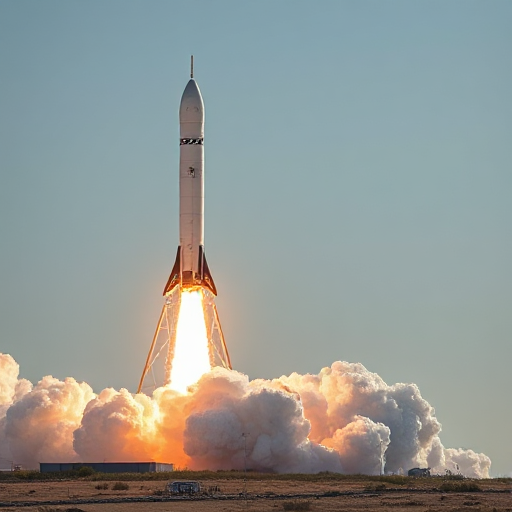
On a recent test flight of SpaceX’s Starship, the much-anticipated mission saw a significant yet bittersweet outcome. The flight, which marked a key milestone in the development of the world’s largest rocket, ended in a dramatic explosion of the spacecraft portion of the system. However, despite the catastrophic failure of the Starship, the mission was not without its successes. The booster rocket, a crucial component of the system, landed safely as planned, showcasing SpaceX’s growing capabilities in rocket recovery and reusability.
The flight, which took place on January 16, 2025, was an ambitious test aimed at refining the Starship system for future missions. SpaceX’s Starship, a fully reusable spacecraft and rocket system, is intended for a variety of missions, from orbital launches to interplanetary travel, including trips to the Moon and Mars. Its design and development are crucial to SpaceX’s long-term vision of making space travel more accessible and cost-effective.
In the early stages of the flight, the booster rocket, known as Super Heavy, successfully separated from the Starship and completed its descent back to Earth. This part of the mission is critical for the success of SpaceX’s reusable rocket program. Super Heavy, which provides the immense thrust needed to launch Starship into orbit, was able to execute a controlled landing on a nearby pad, marking a major success for SpaceX’s rocket recovery technology. The booster’s safe landing signals a significant achievement, as SpaceX continues to perfect the process of landing massive rockets after each mission.
However, the excitement was short-lived. Just minutes after the booster’s successful landing, the Starship portion of the system exploded mid-flight. The SpaceX Starship explosion explanation probably revolves around a propellant leak. While SpaceX has not yet released full details regarding the exact cause of the explosion, the company has stated that it will conduct a thorough investigation to identify and address the issue.
Despite the SpaceX Starship explosion, the company remains optimistic. The company has faced multiple challenges in the development of Starship, with several test flights experiencing failures along the way. However, SpaceX has demonstrated a remarkable ability to learn from these setbacks and continues to refine its designs. The safe landing of the booster rocket, in particular, is a significant step forward in SpaceX’s goal of creating fully reusable rocket systems. With each test flight, the company is gaining valuable data that will help ensure the future success of Starship.
Elon Musk, SpaceX’s CEO, took to social media to express confidence in the company’s progress. “While the Starship did not complete the mission, the booster landing was a key achievement,” Musk wrote. “We are pushing the boundaries of space technology, and setbacks are part of the process. We will learn, improve, and try again.”
As SpaceX looks ahead, the lessons learned from this mission will undoubtedly contribute to future Starship tests, with the ultimate goal of making space travel routine, sustainable, and accessible to all.



Leave a Reply